|
 There are 2 main issues with microphones, positioning and fidelity There are 2 main issues with microphones, positioning and fidelity
Positioning the microphone is never ideal, if it were, it would allow the microphone to create a signal from directional as well as pressure information.
Imagine you want to recreate a live violin from your stereo, it cant be done for a start your brain realises that the
two sources are separated in the room, whereas a violin would not be.
Imagine then that we are using the fixed stereo speakers to reproduce as live as we can, what is the best we can
do:- well if the violin is centre-stage performing and lets say 50 feet away. In this case since our speakers are only
several feet away, we would have to put the microphones something like several feet away from the listener at a
similar angle as his stereo speakers, but that means the mics are therefore 40 feet away from the violinist, and we will have picked up every cough, fart and movement of the audience in-between.
In reality of course instruments are mic'd much closer, in order to make a 'clean' recording and allow the
mixdown to separate the instruments and recombine them better before mastering the recording, but this inherently
means the recording will have all the wrong positional information in it and make the instrument sound much closer on hi-fi than it really was witnessed by the audience.
Positional information, even with stereo microphone pairs is impossible and flawed. Bear in mind that your
loudspeakers are supposed to be reproducing the sound heard at that exact position relative to you, but in the live
situation, so they also radiate directionally and omni-directionally, but the microphone is only gathering the sum of front and rear sounds not discriminating direction.
These inadequacies in microphone positioning are hidden by our lounges; consider the ideal listening situation
would be in an anechoic chamber, with surround/multi channel system, recreating the sound recorded from the loudspeaker positions earlier where a performance in the area was recorded before the listener arrived.
Since there would be no reflected room acoustics/reverb, the sound would be bland although precise and clear.
hence by assuming our lounges will recreate reverberation and reflections, the engineers take the liberty of
removing it from the recordings by miking much closer. This is important since it allows them more control in the mixdown, where again they usually add some reverb/delay effects into the mix to their taste.
SECONDLY - fidelity
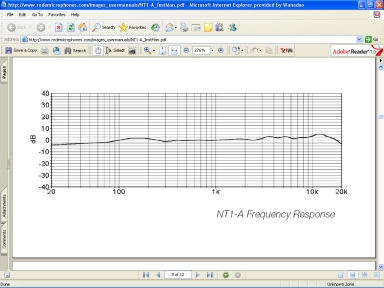
microphones are variable in fidelity, generally having a non-flat response to frequencies, usually deliberately
designed into the mic to minimize handling LF , popping, or feedback frequencies.
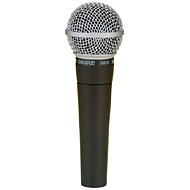  
Classic HQ mic the Sure SM58 is an industry standard for live bands throughout the 70-90s period, and is
typically filtered to deliver a clear response in the vocal frequencies, but severley rolled off bass and a cardiod
pattern that is forgiving of singing/handling technique but inherently picks up a lot of background instruments.
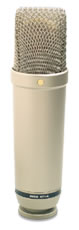
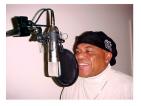
If you are in an anechoic type studio with a fixed HQ studio mic, things are different.
I once heard of some etonian publicity stunt for hi-fi? loudspeakers someone made, where they had a string
quartet behind a silk screen, and then played a recording of it, exclaiming the public couldnt tell the difference!
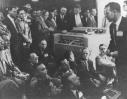 Quite frankly, the PUBLIC cant tell the difference, but the audiophile would instantly - mainly
because the low frequencies even in a string quartet would be all wrong in reproduction, the positional
discrimination of horizontal and vertical source differences would be lost, and generally most of the harmonics and detail associated with high frequency. Quite frankly, the PUBLIC cant tell the difference, but the audiophile would instantly - mainly
because the low frequencies even in a string quartet would be all wrong in reproduction, the positional
discrimination of horizontal and vertical source differences would be lost, and generally most of the harmonics and detail associated with high frequency.

I reccomend the subjective listening section in Borwick's book (std acoustics degree textbook I read), it deals
with all the blind, AB, ABX etc types of listening tests and also the human factors and psychological inferences affecting evaluations

|